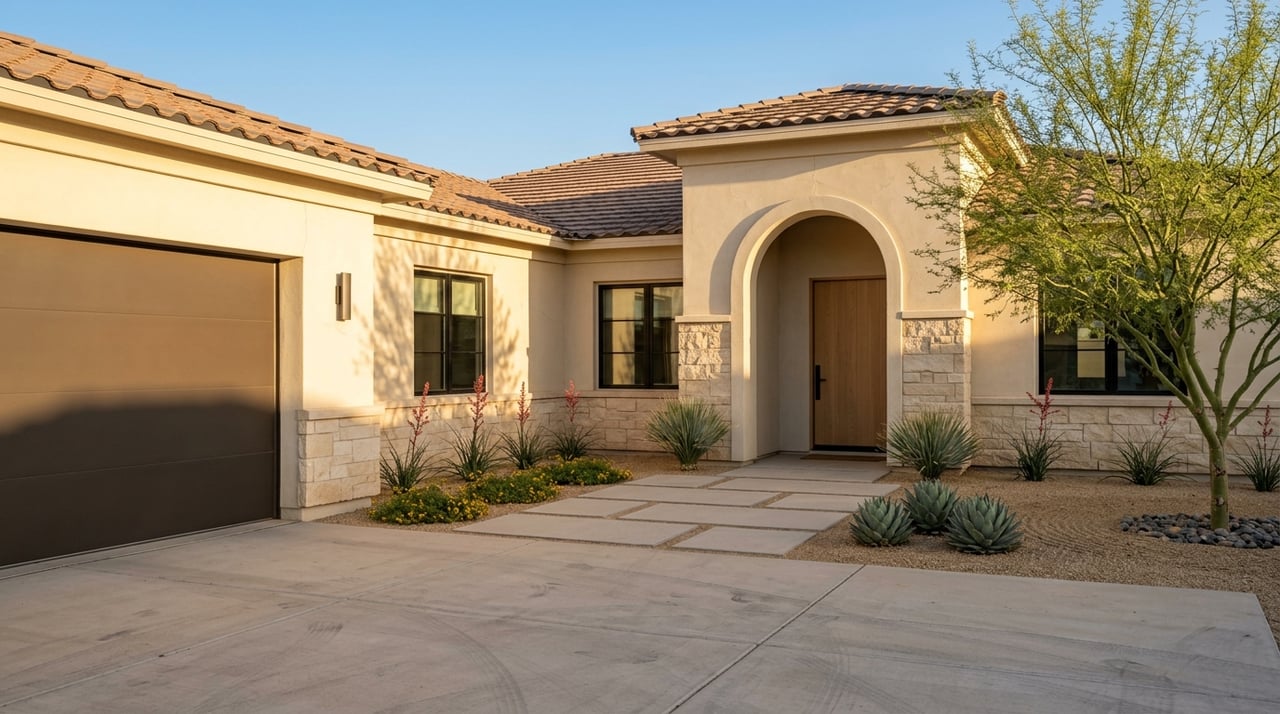
If you’re thinking about selling in Queen Creek, it’s easy to wonder if a remodel will help you make more money. The truth is, not every update pays off, and in a market where buyers are watching price and condition closely, the wrong project can cost you time without adding much return. The good news is that with the right strategy, you can focus on improvements that actually help your home compete. Let’s dive in.
Queen Creek sellers need a targeted plan
Queen Creek is not one simple, uniform market. It spans both Maricopa and Pinal counties, and pricing can vary quite a bit depending on where your home sits.
ARMLS Q1 2026 data shows a median sales price of $470,000 in Maricopa County and $370,000 in Pinal County. In Queen Creek ZIP codes, the range is even wider, from $390,990 in 85143 to $685,000 in 85142.
That matters because a renovation that makes sense for one micro-market may not make sense for another. If you over-improve for your area, you may not get your money back when it’s time to sell.
The broader East Valley also points to a selective market, not an automatic seller win. Redfin reported Queen Creek at $634,990 with 85 days on market in April 2026, and 37.9% of Queen Creek listings had price drops in March 2026.
What buyers are likely to notice
Buyers are paying close attention to condition. According to the 2025 Remodeling Impact Report, 46% of buyers are less willing to compromise on a home’s condition.
That does not mean you need a full remodel. It usually means buyers want a home that feels clean, cared for, and move-in ready enough to give them confidence.
In practical terms, sellers are often better off investing in visible freshness and fixing problem areas before spending heavily on custom finishes. In Queen Creek, where time on market can stretch longer than some nearby cities, condition and pricing often matter more than luxury upgrades.
Renovations that usually make sense before selling
For most Queen Creek sellers, the best pre-listing projects are the ones that improve appearance, reduce buyer objections, and can be completed quickly.
Interior paint
Fresh paint is one of the simplest ways to make a home feel cleaner and newer. NAR identified painting the entire home as a top seller-prep recommendation, and Angi says painting a room can take as little as 2 to 8 hours.
If your walls show wear, bold color choices, or patching, paint can make a strong difference without a major budget hit. It is often one of the safest first dollars to spend.
Garage door replacement
A garage door can have a big effect on curb appeal. JLC’s 2025 Cost vs. Value report shows a garage door replacement with a national cost recoup of 268%.
That kind of return stands out, especially for homes where the garage faces the street and is one of the first things buyers see. If your current door looks dated or worn, this can be a smart upgrade.
Steel entry door replacement
Your front door sets the tone before a buyer ever walks inside. JLC reports a steel entry door replacement with a 216% national cost recoup.
If your existing door looks tired, damaged, or out of step with the home’s overall presentation, replacing it can create a stronger first impression. It is also a relatively contained project compared with a broader remodel.
Minor kitchen refresh
A minor kitchen remodel can make sense if the kitchen feels dated but still functions well. JLC reports a midrange minor kitchen remodel with 113% national cost recoup.
The key word is minor. Think refresh, not full demolition. Updating worn surfaces, improving appearance, and making the space feel current can help, but a major redesign is usually a different story.
Projects that depend on your home’s condition
Some repairs or remodels can be worth doing, but only if they solve a real problem that could hurt your sale.
Roof replacement
A new roof is not always a profit-maker, but it can be important if the current roof is near the end of its life. JLC reports about 68% recoup for asphalt shingle roof replacement, and Angi says a standard asphalt roof usually takes 1 to 3 days.
If your roof is likely to raise inspection concerns, lead to buyer hesitation, or trigger lender issues, replacing it may be the right call. In that case, the value is often in keeping the transaction together rather than chasing a big premium.
Small bathroom remodel
A small bathroom remodel can help if the room feels worn, dated, or functionally weak. Angi says a small bathroom remodel usually takes 3 to 4 weeks, with an average of 23 days, while JLC reports about 80% recoup for a midrange bath remodel.
That timeline matters. If you need to sell soon, a bathroom remodel may not be your best first move unless the bathroom’s condition is clearly holding the home back.
Window replacement
Window replacement is usually a case-by-case decision. JLC reports a 76% national recoup for vinyl window replacement.
If your windows are broken, visibly failing, or hurting the home’s appearance, replacement could help. If they are simply older but still functional, the return may not justify the cost before listing.
Renovations you should usually skip
Bigger projects often sound appealing because they seem like they should boost value. But before selling, they are usually the riskiest place to spend money.
Major kitchen remodels
A major kitchen remodel often takes longer and recoups far less than sellers expect. JLC reports just 51% recoup for a midrange major kitchen remodel, and Angi says kitchen remodels usually take 6 to 10 weeks, with planning and permitting adding more time.
That is a lot of cost, disruption, and delay for a project that may not come back at closing. In most cases, a light kitchen refresh is the safer move.
Additions and specialty upgrades
Projects like bathroom additions, primary suite additions, ADUs, patio projects, and solar installation generally show lower cost recoup in JLC’s 2025 report, ranging from 18% to 53% depending on the project.
These are usually poor pre-list investments unless your home has a serious functional issue that makes it hard to market as-is. For most sellers, these dollars are better spent on presentation, repairs, and pricing strategy.
When selling as-is may be smarter
In many Queen Creek situations, the best move is to handle the obvious, high-impact fixes and then list the home as-is. This can work well when the home is clean, functional, and priced competitively for its condition.
An as-is approach does not mean ignoring problems. It means being thoughtful about where you spend money and avoiding projects that create weeks of delay without a clear payoff.
It is also important to remember that selling as-is does not remove disclosure obligations. Arizona disclosure materials state that sellers must disclose known material latent defects through the SPDS.
Permits and contractor rules matter
Before you start work, make sure you understand whether your project requires permits. Queen Creek says permits are required for projects that can include roofing, electrical and air-system modifications, water heater installations, garage-to-living-area conversions, some remodeling work, pools and spas, patio enclosures, and several accessory structures.
If your property is on the Pinal County side or outside town limits, permit rules may differ. Pinal County says work that is not expressly exempt requires a permit, though some small accessory structures and like-for-like HVAC or water heater replacements may be exempt.
Contractor licensing also matters. The Arizona Registrar of Contractors says a license is generally required if labor and materials exceed $1,000 or if a permit is required.
That means larger projects can quickly become more complicated than sellers expect. If a renovation is likely to involve permits, licensed trades, inspections, and several weeks of work, it should offer a very clear financial upside before you move forward.
A practical way to decide
If you’re unsure whether to renovate before selling in Queen Creek, start with three questions:
- Does this fix a visible issue buyers will notice right away?
- Does this reduce the chance of inspection or financing problems?
- Is this improvement likely to fit my specific Queen Creek price range and location?
If the answer is yes to one or more of those, the project may be worth considering. If not, you may be better off putting that money into cleaning, paint, light repairs, staging, and strong marketing.
The best strategy is usually simple
For many Queen Creek homeowners, the smartest pre-sale strategy is not a major remodel. It is a focused plan that improves first impressions, handles true condition issues, and avoids overspending in a market where buyers are selective.
That is where local pricing, preparation, and presentation all need to work together. A home in one Queen Creek ZIP code may support a different prep plan than a similar home in another, especially given how much prices vary across the area.
If you want to maximize your sale without wasting time or budget, it helps to look at your home through the lens of likely buyer objections and realistic return. That kind of strategy can protect your timeline and your bottom line.
If you’re deciding what to fix, what to skip, and how to position your home for today’s Queen Creek market, Jamie Flanagan can help you build a smart, data-driven plan that fits your goals.
FAQs
Should you renovate before selling a home in Queen Creek?
- Usually, you should start with smaller, visible improvements like paint, basic repairs, and curb appeal updates before considering larger remodels.
What home improvements add the most value before selling in Queen Creek?
- Based on the research provided, projects like interior paint, garage door replacement, steel entry door replacement, and a minor kitchen refresh tend to offer the strongest pre-listing value.
Is it better to sell a Queen Creek house as-is?
- Selling as-is can be a smart option if the home is clean, functional, competitively priced, and does not have major issues that are likely to derail a buyer during inspection or financing.
Do you need permits for renovations in Queen Creek, Arizona?
- Yes, many projects in Queen Creek require permits, including roofing, electrical work, some remodeling, water heater installations, patio enclosures, and other specified improvements.
Do sellers still have to disclose problems when selling as-is in Arizona?
- Yes, Arizona sellers still must disclose known material latent defects through the SPDS, even when selling the home as-is.
