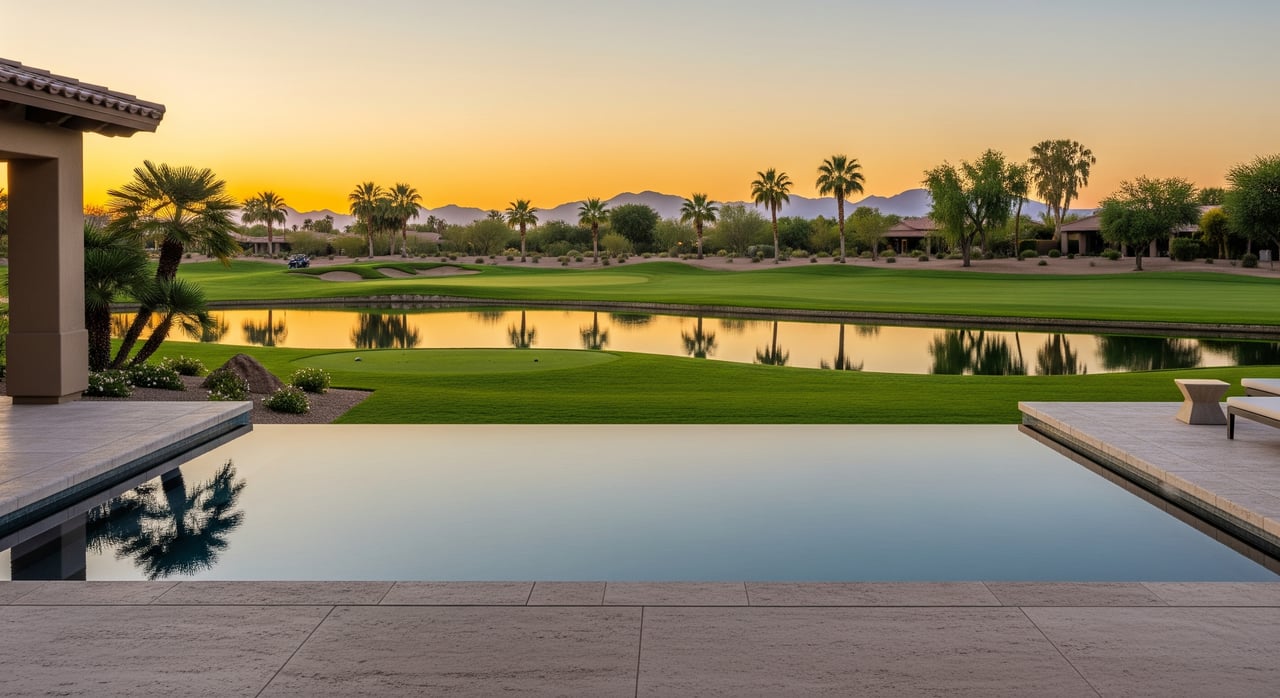
Dreaming of waking up to green fairways and sunset views right from your patio? If you are considering a home along the Seville golf course in Maricopa, you are weighing lifestyle perks against practical trade-offs and long-term resale. You want a clear picture before you pay a premium or prep your property for market. In this guide, you will learn the day-to-day realities, what drives value, and a step-by-step due diligence checklist to make a confident decision. Let’s dive in.
Lifestyle at Seville golf course
Living on the course blends scenic views, recreation, and resort-style amenities. Seville is a master-planned community centered on its golf course and social facilities, with a clubhouse, pools, walking paths, and neighborhood parks. You get easy access to activities and a community feel that many buyers prioritize.
A typical resident mix includes full-time families, commuters to Phoenix and Tempe, and seasonal buyers who arrive for the mild winter months. That seasonal pattern influences demand and can also shape ideal timing if you plan to sell.
Arizona’s desert climate sets the tone for outdoor living. Summers are hot, winters are mild, and monsoon season brings periodic storms. The course’s irrigation and turf management keep fairways green, which enhances your views and can affect HOA or club costs that are worth understanding up front.
Key benefits you will notice
- Open views and outdoor living. Fairway and green vistas, big skies, and colorful sunsets encourage patio time and outdoor dining.
- Recreation and social life. Proximity to golf, pools, walking paths, and community events simplifies your schedule and expands your social options.
- Consistent upkeep. Professionally maintained common areas create a tidy streetscape and can support neighborhood pride of ownership.
Common trade-offs to expect
- Errant golf balls. Tee and green-adjacent lots see more ball strikes. You will want to consider protective glass, screens, or nets and confirm your insurance coverage.
- Privacy and traffic. Cart paths and clubhouse activity may bring more passersby, especially near popular holes.
- Noise and schedules. Mowers, sprinklers, and early maintenance crews can add noise at certain hours.
- Chemicals and odors. Courses use fertilizers and pest control. If you have sensitivities, ask for the course’s policies and disclosures.
- Water use perceptions. Lush turf in a desert setting raises sustainability questions for some buyers. Knowing how the course manages water can ease concerns.
Insurance and safety basics
Property damage from golf balls is a common disclosure topic in golf communities. Before you buy or list, review your policy and endorsements with your insurance agent. Some carriers recommend or require impact-resistant windows, screens, or strategic netting, especially for tee and green lots. If your yard borders a path or open space, clarify where property boundaries end and who maintains fencing or landscaping so liability responsibilities are clear.
Resale drivers for golf-course lots
Golf-front homes often command a premium, but the actual value depends on the specific lot, view quality, community fees, and market conditions in Maricopa. Focus on these variables when you price or make an offer.
Lot orientation and type
- Tee box or green-front. Typically the most dramatic views, but higher exposure to ball strikes and foot traffic. Some buyers love the energy, others prefer quieter spots.
- Fairway or bunker-side. Often provide wider sightlines with less direct activity than greens or tees.
- Corners, cul-de-sacs, and water features. Unique positions can add privacy or standout views that boost appeal.
- Depth and build envelope. Deeper lots allow larger patios, shade structures, and landscaping, which helps everyday living and resale.
Views and sightlines
Unobstructed views of greens, water features, and landscaped fairways tend to sell faster and at higher prices. Over time, trees, new two-story homes, or neighbor additions can affect view corridors. View preservation can be a selling point, but it is rarely guaranteed, so review HOA guidelines before you plan tall plantings or structures.
Amenities and broader access
Proximity to the clubhouse, pools, and social facilities adds convenience that many buyers value. At the same time, being too close to high-traffic areas can increase noise. Off the course, access to schools, grocery options, medical services, and freeway routes like State Route 347 affects your overall lifestyle and widens the buyer pool at resale.
HOA, club structure, and fees
Understand how the club operates. Are memberships optional or mandatory, and are they transferable with the home? Higher dues or required memberships can shrink the buyer pool, while a well-run, financially stable club with active programming can enhance perceived value. Review HOA dues, rules, and any recent or potential special assessments that could impact your long-term costs.
Seasonality and listing timing
Maricopa sees strong seasonal demand from winter residents. Listing during the fall and winter can increase exposure to motivated buyers who prioritize golf and outdoor living. Pricing and presentation still matter, but timing can help you secure a better outcome.
Course condition and long-term stability
A well-maintained, financially sound course supports property values. If maintenance slips or course operations change, adjacent home values can suffer. Ask about ownership structure, financial health, and any planned upgrades or water management changes so you can assess future risk.
Typical premium ranges
Industry observations across markets often show golf-facing premiums ranging from low single digits up to around 15 to 20 percent. In practice, premiums in Seville are highly lot specific. Recent closed sales of similar golf-front homes in your section of the community will give you the most reliable estimate.
Buyer due diligence checklist
If you are evaluating a home on the Seville course, use this checklist to confirm the details that affect your lifestyle and financial outcome.
Documents and records
- HOA and CC&R guidelines, including landscaping, fencing, screening, and exterior changes.
- Club rules and membership agreements, including initiation dues, transferability, and monthly fees.
- Course ownership and governance details, including responsibilities for maintenance and any use covenants.
- Recent HOA and club meeting minutes and financials to spot dues increases or capital projects.
- Seller disclosures about golf ball damage, irrigation easements, and any known maintenance chemicals.
Physical inspections and site checks
- General home inspection with attention to windows, patio doors, screens, and stucco for prior ball strikes.
- Boundary and plat map review to confirm lot lines, easements, and fencing responsibilities.
- Irrigation and drainage review in backyards that border the course to avoid standing water or erosion.
- Course maintenance policies on pesticides and fertilizers if you have health or environmental concerns.
Insurance and risk mitigation
- Confirm coverage for golf ball damage and any exclusions.
- Obtain quotes for impact glass, upgraded screens, or discreet netting if you are near a tee or green.
- Ask your agent about liability considerations if a path or open space is adjacent to your yard.
Market research and valuation
- Request a comparative market analysis centered on golf-adjacent comps in Seville and nearby sections.
- Compare days on market and list-to-sale ratios for golf-front versus interior lots.
- If you plan improvements, gather contractor quotes and compare the likely ROI to what buyers in Seville are paying for similar features.
Seller strategies to maximize resale
If you are preparing to list a golf-front home, position your property to make the view and outdoor living the star while removing buyer objections.
Value-add improvements buyers love
- Outdoor living upgrades. Covered patios, shade structures, quality pavers, and subtle lighting extend use during hot months and frame the view.
- Desert-appropriate landscaping. Keep sightlines open with strategic plantings and raised planters that add privacy without blocking views.
- Protective enhancements. Impact-resistant patio glass and upgraded screens reassure buyers near tees and greens. Disclose any permanent netting and ensure it blends with the design.
- Interior view moments. Open sightlines from living areas to the fairway, plus window treatments that highlight rather than hide the scenery.
Pricing and listing strategy
- Price to golf-front comps. Match recent sales of similar lot types, orientations, and conditions. Overpricing the “view premium” can lead to long days on market.
- Highlight unique advantages. Short walks to the clubhouse, stable HOA and club financials, recent course upgrades, and any transferable club benefits.
- Time the market. List during high-demand months when seasonal buyers are searching. Schedule open houses when weather and light best showcase patios and views.
Big Picture Real Estate Group offers staging, contractor coordination, and premium marketing that align with these strategies. That combination helps you present a polished product and capture the strongest buyer pool.
Buyer negotiation tips
Use specific observations to tailor your offer and protect your long-term value.
- Mitigation credits. If you are near a tee or green, request seller credits for impact glass, upgraded screens, or other protective features.
- Fee adjustments. If dues are high or memberships are mandatory, reflect the carrying cost in your offer or ask for concessions.
- Contingencies for uncertainty. If you have questions about course finances or water restrictions, include contingency language or negotiate a price that accounts for potential risk.
The bottom line
Living on the Seville golf course in Maricopa delivers a daily dose of views, convenience, and community. The premium you pay or capture at resale comes down to lot orientation, view quality, course health, fees, and market timing. With the right due diligence and a smart preparation plan, you can enjoy the lifestyle today and protect your long-term value tomorrow.
If you want a data-backed valuation or a plan to prep and market your golf-front home, request your free home valuation with Jamie Flanagan. Our team blends investor-grade analysis with high-touch listing services to help you buy or sell with confidence.
FAQs
What should buyers know about golf ball damage and insurance?
- Ask your insurance agent about coverage for ball strikes, potential endorsements, and whether impact glass or upgraded screens will reduce risk or premiums.
How much do Seville golf-course lots usually command at resale?
- Premiums vary widely by lot and view, with industry observations ranging from low single digits up to around 15 to 20 percent, so rely on recent closed comps in Seville.
Are club memberships in Seville mandatory or transferable?
- Membership structures differ by community and club, so review the club rules to confirm whether memberships are optional or required and whether they can transfer with the home.
What are the most common nuisances of golf-course living?
- Expect some golf ball risk, early morning maintenance noise, and increased cart path activity near certain holes, which can be mitigated with protective features and smart landscaping.
How does seasonality affect selling a Seville golf-front home?
- Demand from winter residents typically increases in fall and winter, so listing in those months can improve exposure and pricing for golf-oriented buyers.
What documents should I request before buying on the course?
- Gather HOA and CC&R guidelines, club agreements, course ownership details, recent financials and meeting minutes, and the seller’s disclosures related to golf-course adjacency.
